What is a CSA F280 heat loss calculation?
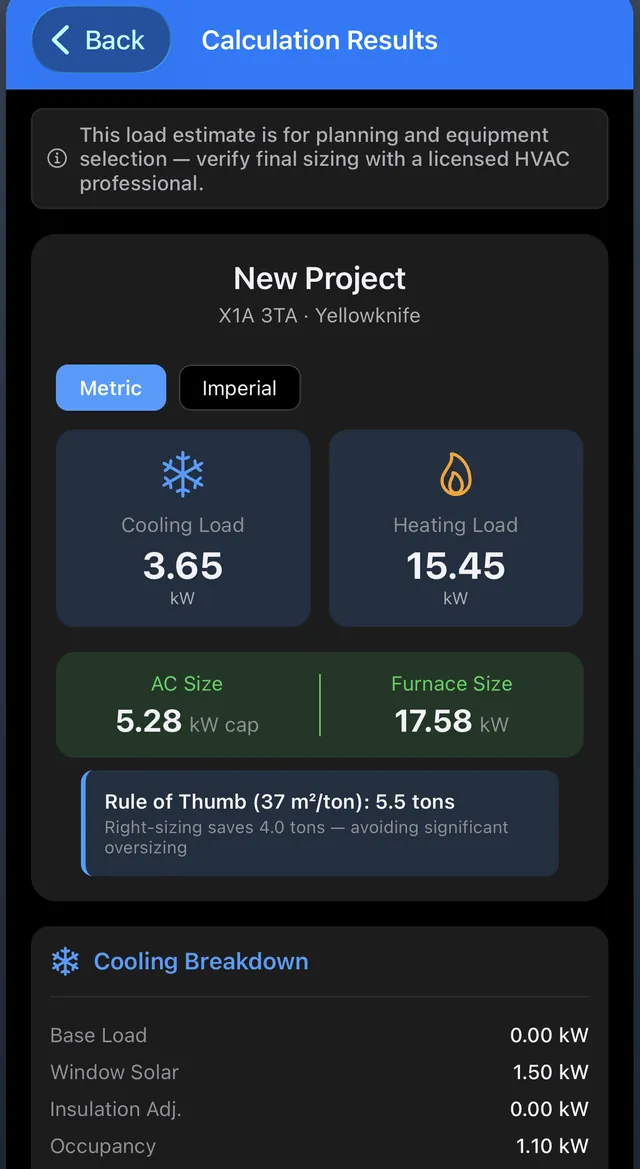
CSA F280 is Canada’s method for estimating residential heating and cooling loads. It accounts for the building envelope, air leakage, ventilation, internal gains, and Canadian design conditions — including below-grade losses that matter in Canadian winters.
Is this for homeowners or contractors?
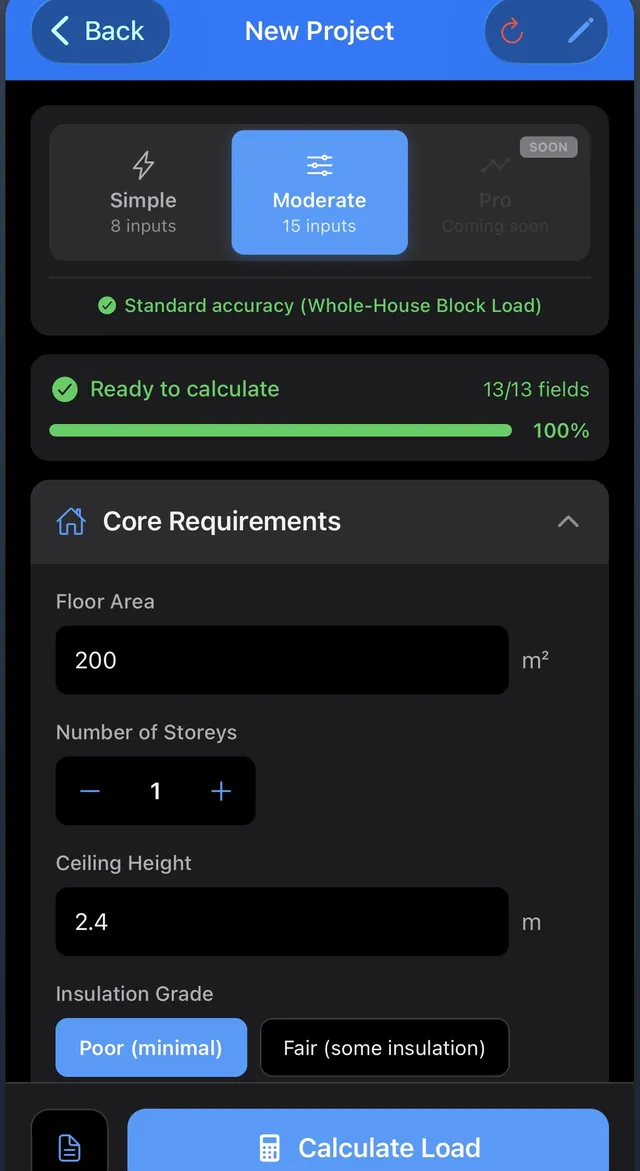
Both. Homeowners tap the quick estimate on the home screen, enter a postal code and the basics, and get a plain-language answer: roughly what size heat pump carries the house to what temperature, and how much backup heat it needs. Contractors use Pro Mode for measured R-values, wall area, NFRC window ratings, HRV/ERV recovery and a specific unit’s rated capacities, and export the branded PDF.
Where do the Canadian design temperatures come from?
The bundled climate data is the building code's own Appendix C Table C-2 (NBC 2020; BC Building Code 2024 in BC), mapped by the first three characters of the postal code to the nearest code location in the same province — 685 code locations and 1,651 postal areas across all provinces and territories.
Is this CSA certified or a compliance document?
No. Results are planning estimates for qualified HVAC professionals based on CSA F280-12 methodology. The app is not CSA certified or approved for code compliance, and it is not a substitute for a stamped load calculation where one is required.
Does the CSA F280 heat loss calculator work offline?
Yes. Postal-area climate data and F280 calculation methods ship inside the app, so you can finish a calc in a mechanical room or a new build with no service.
Is the app available in French?
Yes. Full French-Canadian localization is included, reviewed by a Quebec native speaker.
Need US Manual J instead?
Use HVAC Load Calculator for ACCA Manual J 8th Edition methods with US ZIP climate data. This Canada app is rebuilt around CSA F280-12, not an international mode of the US product.